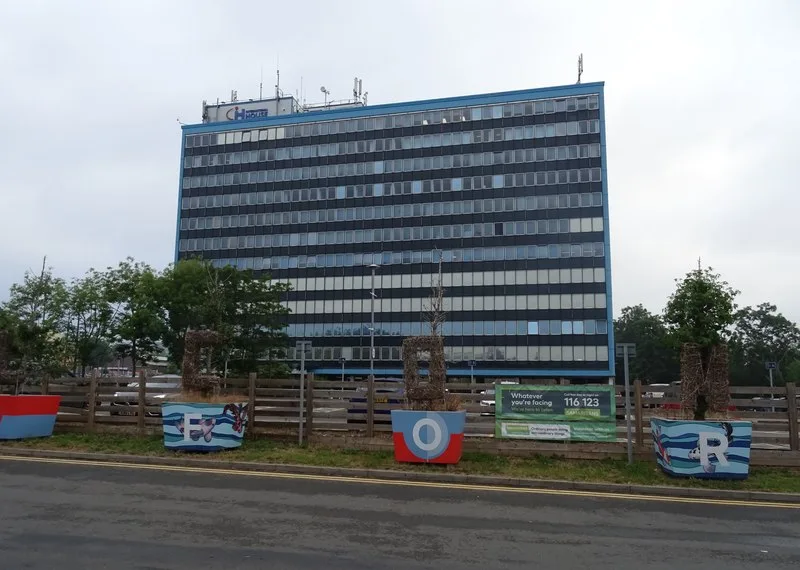

Staff sickness cost Ashford council an estimated £852,650 in 2025/26, and 9.25 days lost per employee missed its new 9-day target. Mental ill health led.
Ashford Borough Council lost 5,801.37 working days to staff sickness in 2025/26, and puts the estimated cost at £852,650. The figure works out at 9.25 days lost for every full-time equivalent employee, which misses the 9-day target the council set itself in December 2025.
The numbers are in the Annual Sickness Report 2025/26, written by HR Operations Manager Joy Cross and dated 14 September. It goes before the council’s Overview and Scrutiny Committee at 7pm tonight, Tuesday 22 September, in the Council Chamber at International House.
The target the council missed in its first year
Councillors asked for a sickness target in July 2025. Cabinet approved one in December 2025, setting it at 9 days per full-time equivalent employee a year. The report is the first to measure performance against it, and the answer is 9.25 days, over by 0.25 of a day.
The council is candid about it. The dashboard attached to the report states plainly that “the 9-day KPI was not achieved for the 12-month period”, while the report itself argues the overshoot is “still within reasonable tolerance”.
Sickness also rose slightly. The comparable figure for 2024/25 was 9.14 days per employee, so days lost per employee are up 1.2% in a year.
The rolling twelve-month figure moved like this through 2025/26:
| Quarter | Twelve months to | Days lost per employee |
|---|---|---|
| Q1 | 30 June 2025 | 9.14 |
| Q2 | 30 September 2025 | 8.77 |
| Q3 | 31 December 2025 | 8.71 |
| Q4 | 31 March 2026 | 9.25 |
One measure did improve. The council’s sickness absence rate, which is hours lost as a share of hours available, fell from 4% to 3.55%. That is 42,927.4 hours lost out of 1,205,905.48 available at 31 March 2026. It remains above the 2.9% public sector rate the Office for National Statistics published in May 2026.
How that compares
Against the wider benchmarks, Ashford sits in the middle rather than at either end:
- Ashford Borough Council, actual: 9.25 days per employee
- Ashford’s own target: 9.00 days
- Neighbouring councils that shared figures informally: a broad average of 8.59 days
- Local government nationally, per the Local Government Association in June 2026: 9.30 days
- All sectors, per the CIPD in September 2025: 9.40 days
- The public sector, per the same CIPD report: 13.30 days
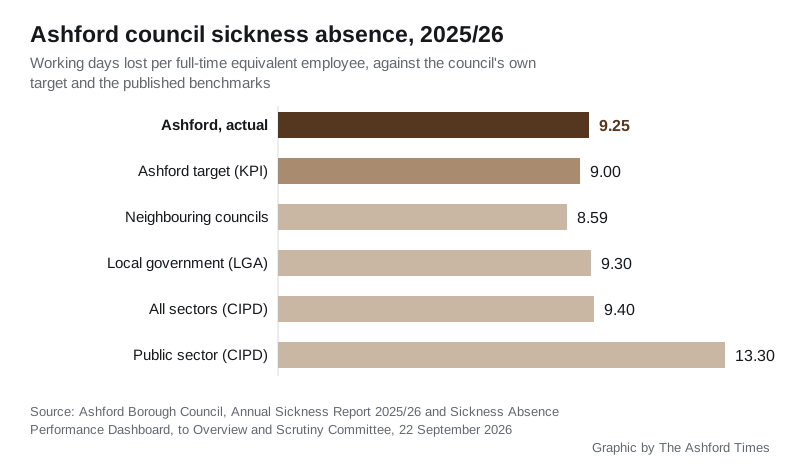
So the council is better than the public sector average and marginally better than local government as a whole, but worse than the neighbours who compared notes with it.
The report is careful about that last comparison. It warns there are “limitations in comparability due to the differing sizes and mix of job roles in each organisation”, and notes there are no agreed national guidelines on how the data is collected. It also offers a reason for the increase: over the past year the council has employed more people in manual and shift roles, which it links to higher sickness levels.
Mental ill health is the biggest single cause
Split by length of absence, the pattern changes sharply.
Long-term absence, meaning 20 days or more, is dominated by one cause. Mental ill health accounted for 1,050.3 days, 47% of the long-term total. The other causes recorded were surgery and recovery at 563.5 days (25%), neurological at 255 days (12%), fracture or injury at 174 days (8%) and musculo-skeletal at 171 days (8%). Those five causes come to 2,213.8 days between them.
Short-term absence, under 20 days, looks more like ordinary ill health. Musculo-skeletal problems came first at 32%, then mental ill health at 23%, surgery and recovery at 19%, neurological at 16% and fracture or injury at 10%.
Which services lost the most days
The dashboard breaks the 5,801.37 days down by service, and sets each service’s share of days lost against its share of the council’s headcount. Two services stand out for opposite reasons.
| Service | Days lost | Share of absence | Share of headcount |
|---|---|---|---|
| Housing | 1,676.48 | 28.9% | 17% |
| Port Health and Public Protection | 1,536.26 | 26.5% | 30% |
| Direct Services | 1,008.07 | 17.4% | 14% |
| People, Communications and Technology | 521.79 | 9.0% | 9% |
| Environment, Property and Recreation | 395.41 | 6.8% | 5% |
| Planning and Development | 282.86 | 4.9% | 8% |
| Finance | 259.46 | 4.5% | 9% |
| Development | 39.50 | 0.7% | 2% |
| Policy and Performance | 33.54 | 0.6% | 2% |
| Legal and Democracy | 31.00 | 0.5% | 2% |
| Chief Executive | 12.00 | 0.2% | 1% |
| Economic Development | 5.00 | 0.1% | 1% |
Housing is the outlier. It employs 17% of the council’s staff and accounts for 28.9% of all days lost, the largest share of any service. Port Health and Public Protection is the reverse: 30% of the headcount and 26.5% of the absence. Planning and Development, which handles planning applications, and Finance both lost proportionately fewer days than their staff numbers would suggest.
Direct Services, the 14% of staff who account for 17.4% of days lost, is the arm that runs front-line operations including waste and recycling collections.
What the £852,650 figure is, and is not
The dashboard gives £852,650 as the “estimated average cost” of the 5,801.37 days, alongside a median salary of £33,951. It does not set out the method behind the calculation, so the figure should be read as the council’s own estimate of the value of the working time lost rather than a cash sum paid out on top of normal wages. Most of it is salary the council would have paid anyway.
The 63 employees being monitored
The council tracks individual absence using the Bradford Factor, a score that multiplies the number of separate absences by itself and then by the total days off, so it penalises frequent short spells more heavily than one long illness. Anyone scoring above 250 is monitored directly.
- 63 employees scored above 250
- the organisation-wide average score is 133.81, including absence related to pregnancy and disability
- formal attendance management action was started with 25 employees
- in 23 of those cases attendance improved
- in two cases the employee resigned
Triggers can be adjusted on occupational health advice for staff who are pregnant or disabled.
What happens next
The council has already added mandatory menopause training for managers, on-site flu jabs, a refreshed management training programme and 16 extra Mental Health First Aiders. For the coming year it proposes:
- two new peer support groups, for carers and for staff early in their careers
- compulsory core management training for all new managers, covering welfare and attendance
- rolling out the additional Mental Health First Aiders across the organisation
- a bigger occupational health budget, to buy private diagnostics and treatment that get people back to work sooner
- talks with staff groups about incentives, including an award for the most improved Bradford Factor score
- another winter of fresh fruit deliveries on Mondays, with a campaign on stopping germs spreading
Councillors are asked three things tonight: whether they want another report in a year, whether they need different information, and whether they consider the current and proposed measures adequate. The committee is chaired by Cllr Brendan Chilton. Human resources sits in the portfolio held by Cllr Dawnie Nilsson.
What it means for you
Staff costs are the largest single thing your council tax pays for, so the time the council’s 626.77 full-time equivalent staff are absent is a legitimate thing to ask about. On these figures Ashford is close to the national local government average rather than an outlier, and its absence rate has fallen even as days per employee edged up.
The more useful number for residents is where the days fall. Housing and Direct Services between them account for 46.3% of all absence, and those are the two arms that deal with council tenants and with bin collections. If you have noticed slower responses from either, this report is the closest thing to an explanation the council publishes.
If you want to raise it, Overview and Scrutiny meets at 7pm tonight at International House on Dover Place, and the council’s democratic services team can be reached on 01233 330491. The full agenda, including the Quarter 1 performance report going to the same meeting, is on the council’s committee site. You can also check how your own bill is made up on our Ashford council tax bands page.
Sources
- Ashford Borough Council, Annual Sickness Report 2025/26, report to Overview and Scrutiny Committee, 22 September 2026
- Ashford Borough Council, Sickness Absence Performance Dashboard, 1 April 2025 to 31 March 2026, Appendix 1
- Ashford Borough Council, Overview and Scrutiny Committee agenda, 22 September 2026
- Ashford Borough Council, the council’s move to International House
Have your say